
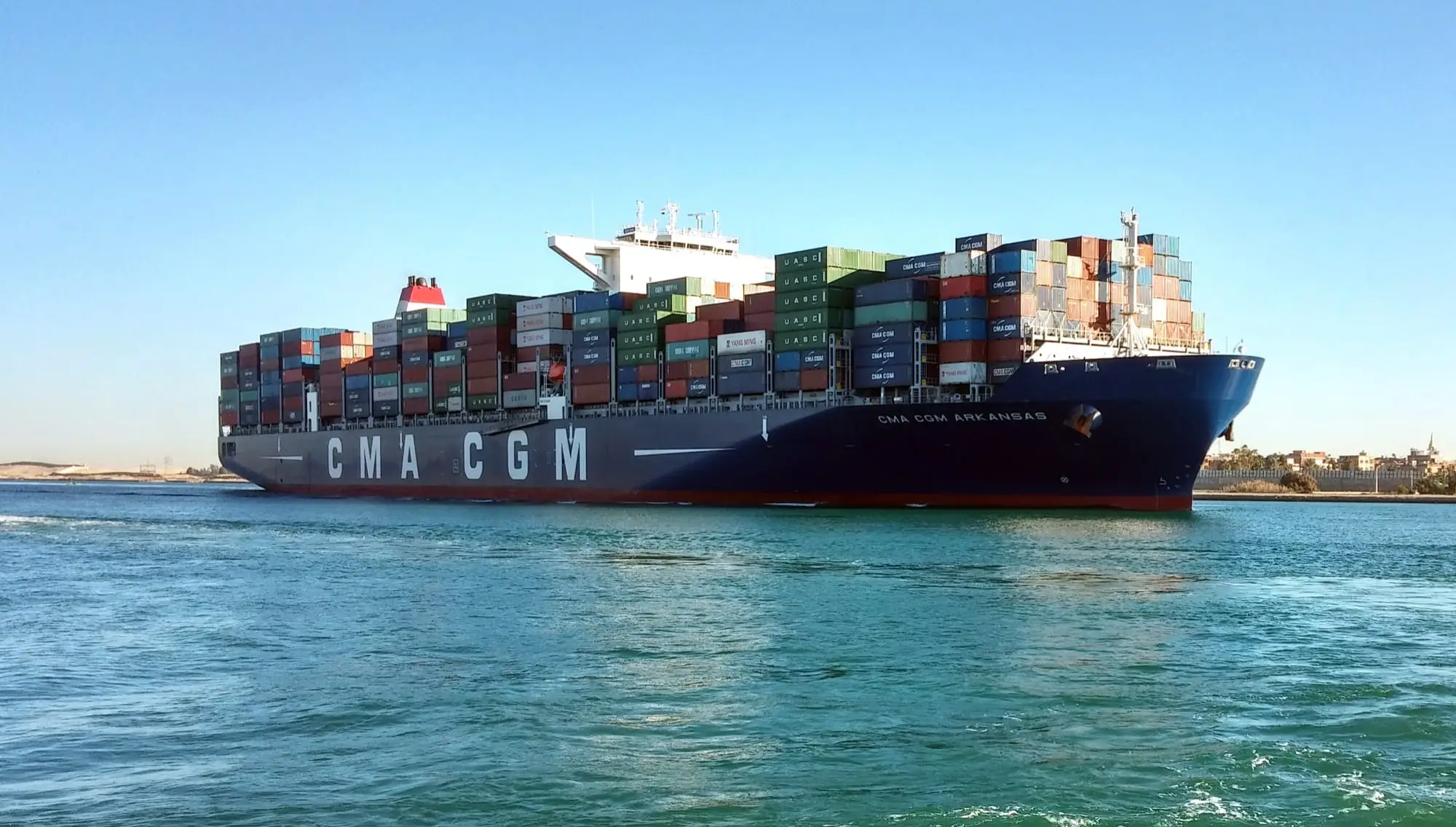
Since late 2023, Houthi attacks on merchant ships in the Red Sea have pushed most major container carriers to route Asia–Europe services around the Cape of Good Hope. The longer voyages raise transit times and fuel use. In 2026 the Gemini Cooperation of Maersk and Hapag-Lloyd began moving some services back to the Suez Canal: according to Reuters, AE15 and AE19 returned to Suez in July and August 2026.
Key points
- Announcement on 14 September 2026: According to Reuters (Copenhagen, 14 September 2026) and gCaptain on the same day, Maersk and Hapag-Lloyd moved four more services from the Cape of Good Hope back to Suez, transiting in both directions:
- AE5: Asia – Northern Europe;
- AE11 and AE12: Asia – Mediterranean;
- ME2: India – Europe.
- Together with AE15 and AE19, the number of Gemini services using Suez rises to six.
- First westbound sailings: Antonia Maersk (AE11) from Tanjung Pelepas (Malaysia) on 19 September 2026; Marchen Maersk (AE5) on 21 September 2026; Cornelia Maersk (ME2) on 24 September 2026. The first AE12 sailing will be announced later.
- Conditional: Maersk said any changes in the Gemini network depend on no escalation of conflict in the region; the carriers are monitoring closely and keep contingency plans to reroute via the Cape if security risks return. Maersk stressed that the safety of crews, vessels and cargo is the top priority.
- Risks cited: Houthi forces remain along Yemen’s Red Sea coast and around Bab el-Mandeb, and shipping through the Strait of Hormuz is also restricted (gCaptain and Marine Insight, September 2026).
Impact on importers and exporters
Cargo from Vietnam to Europe and the Mediterranean can connect through Southeast Asian hubs such as Tanjung Pelepas, where AE11 starts its westbound leg. According to the carriers, the Suez route shortens transit times compared with sailing around Africa. However, the return is partial and can be reversed if security worsens; schedules, transit times and surcharges may change service by service.
What businesses should do
- When booking to Europe or the Mediterranean, ask for the service name, routing (Suez or Cape) and expected transit time for each sailing.
- Avoid tight delivery commitments; keep a time buffer in sales contracts in case a vessel changes route.
- Check cargo insurance terms on war risk and deviation.
- Follow carriers’ official advisories on further service changes.
Sources
- Structural changes to AE5, AE11, AE12 and ME2 Gemini services, Maersk, 14 Sep 2026
- Maersk, Hapag-Lloyd resume services through Suez Canal (Reuters), Global Banking & Finance Review, 14 Sep 2026
- Maersk, Hapag-Lloyd accelerate return to Suez despite Red Sea risks, gCaptain, 14 Sep 2026
- Maersk, Hapag-Lloyd resume more Suez Canal voyages despite Red Sea risks, Marine Insight, 16 Sep 2026