
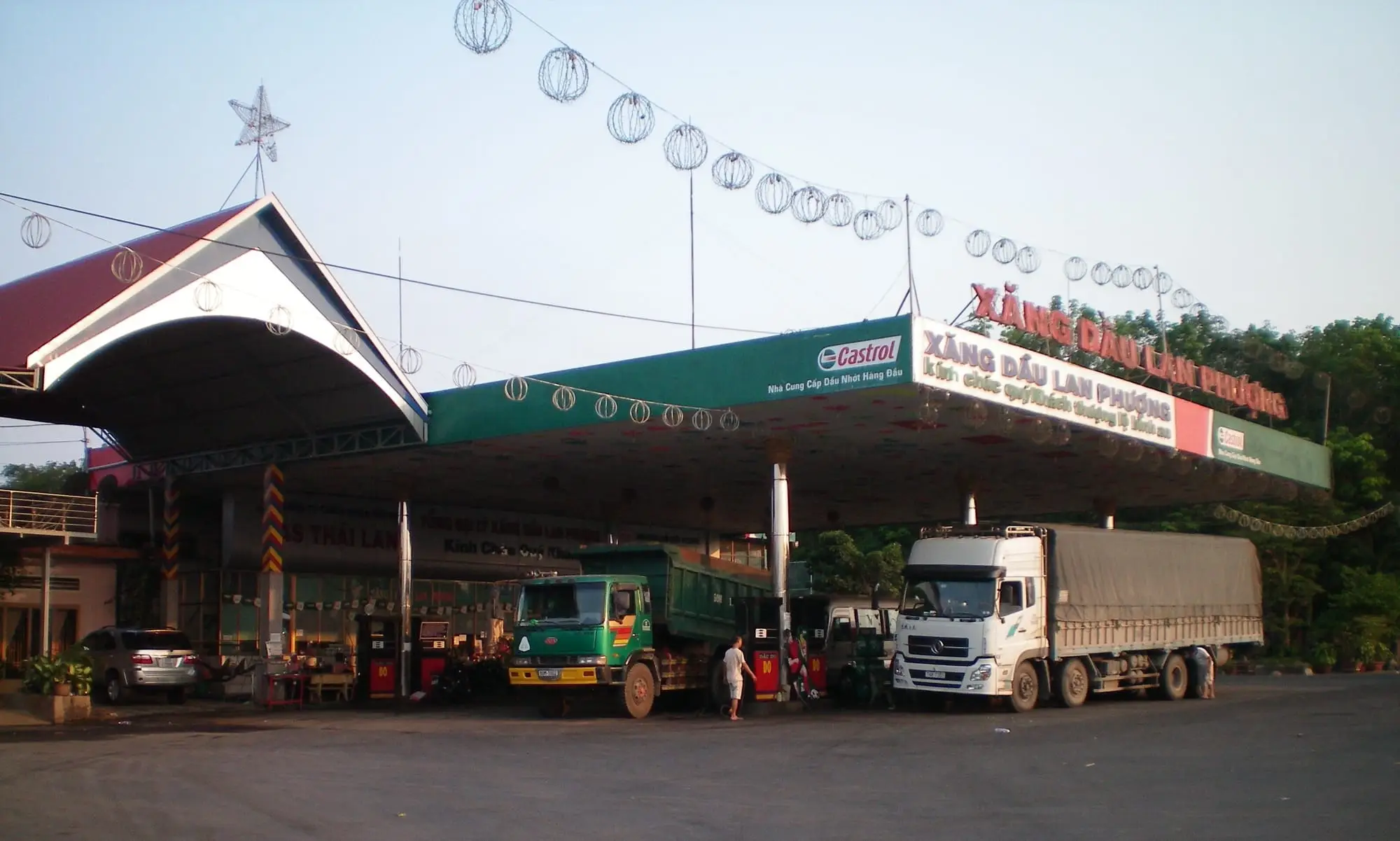
Fuel has been one of the most volatile costs for transport and trading companies in 2026. At the price adjustment of 15:00 on 29 October 2026, the cap on diesel 0.05S rose by VND 696 to VND 30,246 per litre, according to Government News and Tiền Phong on the same day. Five days later, diesel prices turned down. Meanwhile, the Government has kept its tax cuts on fuel in place.
Key points
- Latest prices: from 22:00 on 3 November 2026, the Ministries of Industry and Trade and of Finance set new caps: diesel 0.05S at VND 28,876 per litre (down VND 1,370), E5RON92 petrol at VND 23,203 per litre (down VND 1,020), and fuel oil (mazut) up VND 378 to VND 23,974 per kg.
- Tax relief extended to year-end: Resolution 43/2026/NQ-CP of 30 September 2026 (in force 1 October to 31 December 2026) keeps a 0% preferential import duty on petrol, diesel, fuel oil, jet fuel and some petrochemical inputs, an environmental protection tax of VND 0 per litre, and an exemption from declaring and paying VAT on fuel, while input VAT remains deductible.
- Excise tax on petrol cut to 0%: Resolution 45/2026/NQ-CP of 31 October 2026 applies from 1 November 2026 to 31 March 2027 (this tax applies to petrol, not diesel).
- Inflation: according to General Statistics Office data released in early October 2026, average CPI for the first nine months of 2026 was up 4.52% year on year, with core inflation up 4.26%.
Impact on importers and exporters
Domestic container haulage, inland waterway transport and oil-based inputs such as plastic resin and chemicals all depend directly on diesel prices. According to Thanh Niên (22 September 2026) and Tuổi Trẻ (6 July 2026), trucking rates rose with each fuel price increase and did not fully come back down when fuel got cheaper. Many hauliers could only raise rates on new contracts and lost money on older ones. Both papers also reported that the authorities asked for checks on declared freight rates and action against firms that “raise fast and cut slowly” when fuel prices fall.
What to do
- Add a fuel surcharge clause linked to published diesel prices to domestic transport contracts.
- When diesel prices fall, ask carriers to adjust rates accordingly.
- Follow each price adjustment and the expiry dates of the tax relief (31 December 2026 and 31 March 2027) when budgeting for Q1 2027.
- Consolidate loads and cut empty running to limit the effect of fuel prices.
Sources
- Fuel prices fall across the board, Government News, 3 November 2026 (Vietnamese)
- Latest fuel prices from 22:00 on 3 November, Thanh Niên, 3 November 2026 (Vietnamese)
- Fuel price adjustment from 15:00 on 29 October, Government News, 29 October 2026 (Vietnamese)
- Petrol prices rise, diesel above VND 30,000 per litre, Tiền Phong, 29 October 2026 (Vietnamese)
- Fuel import duty, environmental protection tax and VAT relief extended to end-2026, Government News, 30 September 2026 (Vietnamese)
- Government issues resolution extending fuel tax relief to end-2026, Ministry of Industry and Trade, October 2026 (Vietnamese)
- Resolution 45/2026/NQ-CP on excise tax on petrol, Government policy portal, 1 November 2026 (Vietnamese)
- Average CPI for nine months of 2026 up 4.52%, VietnamPlus, October 2026 (Vietnamese)
- CPI, gold and US dollar price indices for September, Q3 and nine months of 2026, General Statistics Office, October 2026 (Vietnamese)
- Fuel prices surge, inflation pressure, Thanh Niên, 22 September 2026 (Vietnamese)
- Hauliers explain why container trucking rates have not come down, Tuổi Trẻ, 6 July 2026 (Vietnamese)